

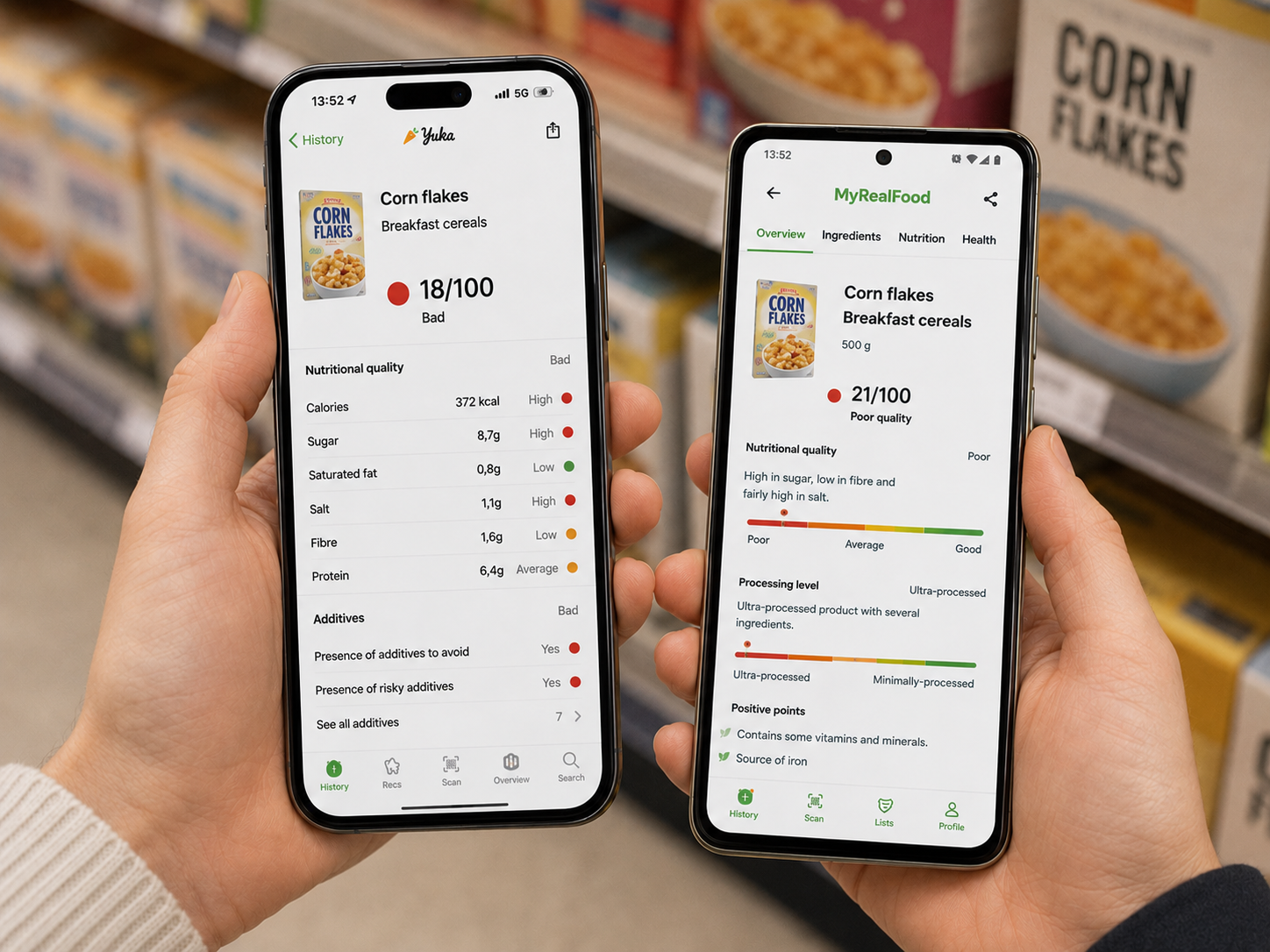
Do you really know what you are eating? Your mobile phone can help you shop more wisely
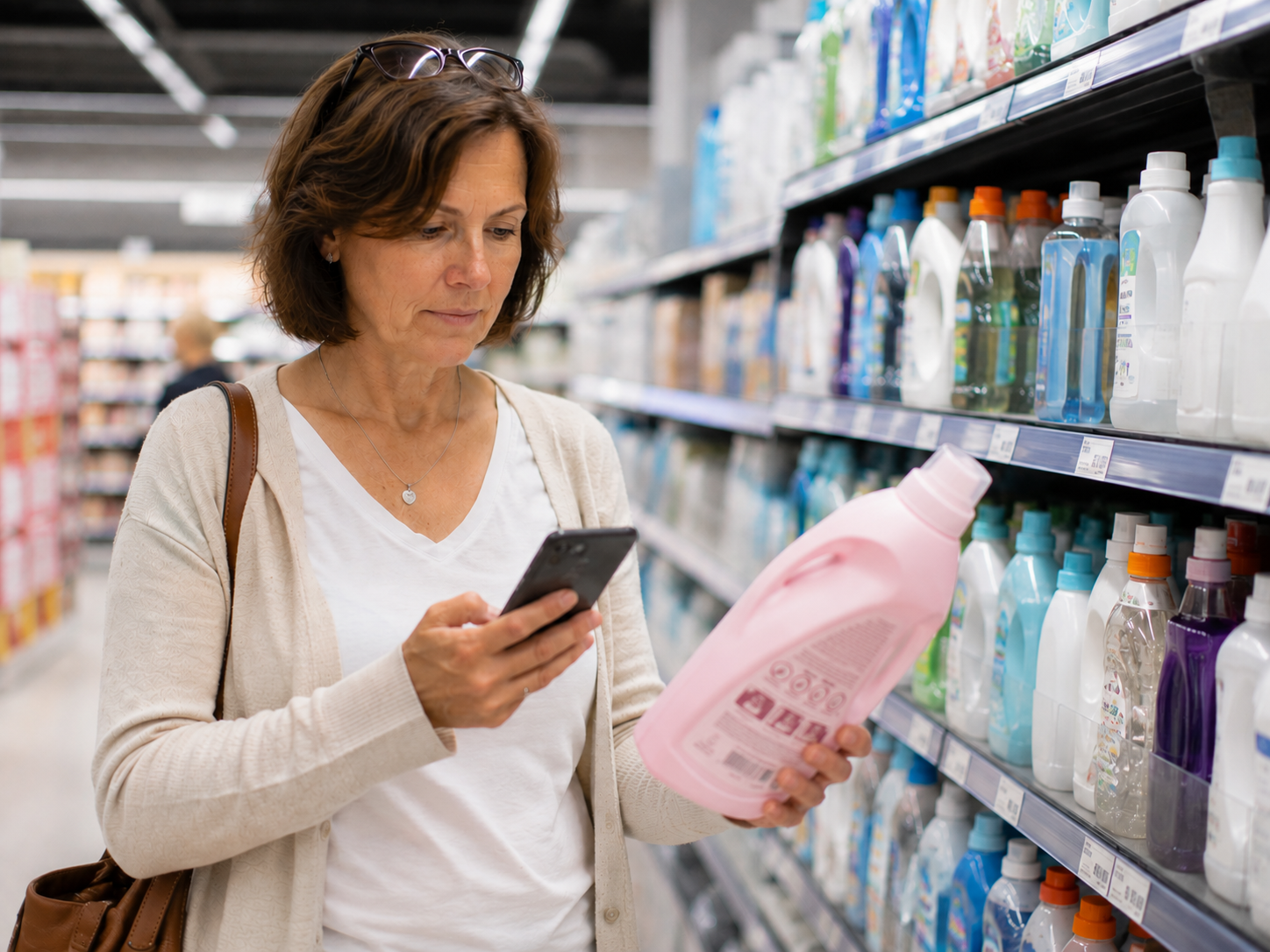
A few years ago, if someone had told us that before buying a packet of breakfast cereals, a tomato sauce or a packet of biscuits we would take out our mobile phone and scan the barcode, we would probably have thought it sounded rather eccentric.
Today, it is perfectly possible… and surprisingly useful.
Because there is a big difference between being able to read a label and truly understanding what we are buying. The small print, nutritional tables, ingredient lists, claims such as “natural”, “no added sugar”, “high in fibre” or “light”, and the carefully chosen images on the packaging can make a product appear healthier than it really is.
And let us not forget marketing. Food manufacturers know very well how to present their products in the most attractive way possible. Some claims may be entirely legal and yet still create an impression that differs significantly from the product’s actual nutritional value.
As we get older, this can become particularly relevant. Nutrition plays an increasingly important role in our wellbeing, but not everyone has had the opportunity to learn how to interpret all this information correctly.
This is where a type of application that is still relatively unknown to many people comes into play: food (and cosmetic) product scanners.
1. How do they work?
The idea is very simple. First, download one of the available applications onto your phone. While shopping, point your phone’s camera at a product’s barcode. The application recognises it and immediately displays information about its composition along with an overall assessment.
Depending on the application, it may provide details about nutritional quality, sugar, salt and saturated fat content, the degree of processing, certain additives, the presence of ingredients you may wish to avoid and even alternative products that it considers healthier.
They do not replace a nutritionist, nor do they perform miracles. However, they can act as a useful “translator” between supermarket labels and consumers. Perhaps their greatest advantage is that we do not need to become nutrition experts to start making more informed choices.
2. Which ones are worth knowing about?
There are quite a few applications of this type, and the market evolves rapidly. For this article, I have selected some that are currently particularly relevant for people buying food in Spain.
● Yuka: probably the best-known app
Yuka is arguably the application that has done the most to popularise this concept. It allows users to scan food products as well as cosmetics and provides a simple score accompanied by an explanation.
For food products, its assessment is mainly based on three elements: nutritional quality, the presence of certain additives and whether the product is organic. Nutritional quality accounts for 60% of the score, additives for 30% and organic status for 10%.
One of its greatest strengths is its simplicity. Within seconds, users can see whether a product receives a favourable rating and, if not, explore suggested alternatives. Yuka states that its database currently contains around four million food products.
More information about Yuka: https://yuka.io/en/
● MyRealFood: a strong focus on ultra-processed foods. It takes a slightly different approach and places particular emphasis on distinguishing foods according to their degree of processing.
It also allows users to scan products, receive a score from 0 to 10, compare alternatives and access information related to nutritional goals, allergies and intolerances. In addition, it includes a vast recipe library and various tools for monitoring eating habits.
It may be particularly interesting for people who want to look beyond calorie counting and pay closer attention to the amount of ultra-processed food they consume.
More information about MyRealFood: https://www.myrealfood.app
● GoCoCo: another particularly interesting option in Spain. It was one of the first Spanish applications of this type. Its approach combines several evaluation systems, including the World Health Organization nutrient profile model and the NOVA classification, which categorises foods according to their level of processing. It also considers sugar, saturated fat, sodium and calorie levels.
Its scoring system ranges from 0 to 10 and, in addition to evaluating products, it offers healthier alternatives and features related to nutrition, weight management and diabetes control. For anyone wishing to pay particular attention to ultra-processed foods or metabolic health, it may be a valuable option.
More information about GoCoCo: https://www.gococo.app
● Open Food Facts: less judgement, more information. It is a somewhat different concept. It is an open and collaborative food database containing information on millions of products.
Its application allows users to scan and compare products and provides nutritional information, Nutri-Score ratings and NOVA classifications, among other data. The current version also allows users to compare several products according to the criteria that matter most to them.
It may be particularly useful for those who prefer access to detailed information and want to form their own opinion rather than simply relying on a final score.
More information about Open Food Facts: https://world.openfoodfacts.org
3. But… can we trust these applications?
These applications are tools, not judges. Two different apps may analyse the same product and give it different ratings because they use different criteria and calculation methods.
Furthermore, a score generally relates to a product rather than to our overall diet. A poor rating does not mean that a product should be banned from our shopping basket forever. Likewise, a high rating does not automatically make our diet healthy.
Quantity also matters. There is another practical limitation: if a product is not registered in the database or the available information is incomplete, the application may not be able to provide an assessment. This still happens with certain products, particularly less common ones.
For that reason, my advice is simple: use these applications to compare and learn, not to follow them blindly.
4. A small habit that can change the way we shop
Perhaps the most interesting aspect is not the application itself but what happens after using it for a while. Once we start scanning products, we often discover something surprising: some foods we considered healthy are not quite as good as we thought, while others that seemed unremarkable turn out to be much better choices.
Gradually, we begin paying more attention to sugar, salt, saturated fats, ingredients and levels of processing. Above all, we start comparing.
Personally, I have been using one of these applications for several years and can honestly say that it has changed the way I look at supermarket products. It has altered my shopping habits, helped me pay much closer attention to the quality of my diet and made me more aware of the relationship between what I eat and my overall health.
My view of the market for food, cosmetic and household cleaning products has changed considerably. I have become aware of a reality that was previously unknown to me. I now feel better informed and better equipped to avoid unhealthy products, eat more healthily and maintain a balanced diet without having to give up everything I enjoy.
That is what I appreciate most about these apps: they do not make decisions for us; they simply help us make better-informed ones.
5. One final thought
The applications available in Spain are not necessarily the best choice for everyone. Other countries have different tools, databases and evaluation systems that may be more comprehensive or better adapted to local products.
However, if you live in Spain and have never used one of these applications, it may be worth trying one the next time you visit the supermarket. Scan a product you buy regularly. Then scan a similar product from another brand. Compare them. I can almost guarantee that you will be surprised. You may also discover that a higher price does not always mean higher quality.
You may find that supermarkets have not changed as much as you thought… but that your way of shopping can change dramatically.
At DIDIER&Co, we like to share information that may be of interest to you, such as what you have just read.
We want to help you settle in Spain and overcome language and bureaucratic barriers. With more than fifteen years of experience, we provide advice, assistance and interpreting in Spanish, English, French and soon Dutch. Spanish medical interpretation and medical translation is our speciality. Whether you are a resident or a tourist, we support you when you need to see doctors in Spain or navigate official procedures. Our aim is to make your life easier.
WE INTERPRET, WE HELP, WE CARE.