

12 surprising facts about Spain you wouldn’t expect
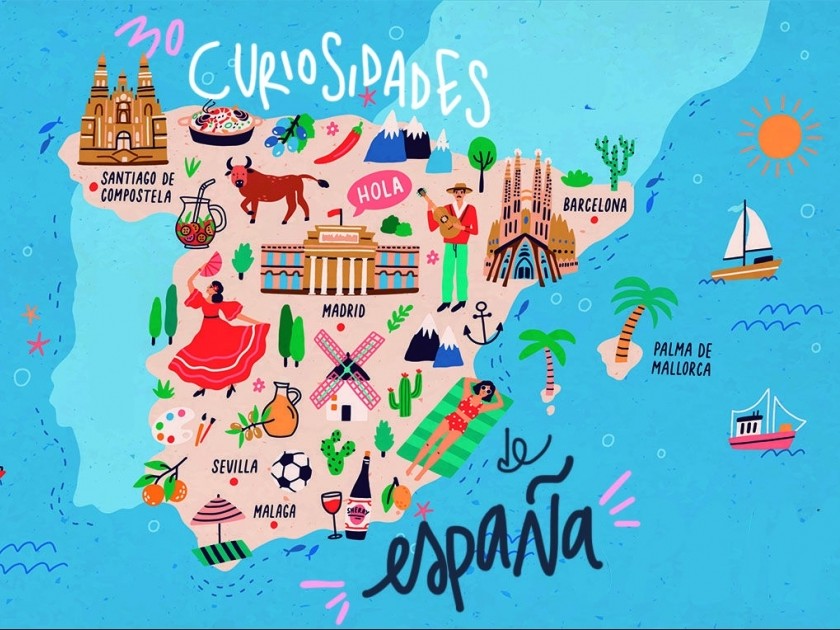
When people think of Spain from abroad, some very clear images often come to mind: bullfighting, siestas, paella, flamenco… and impossible meal times for lunch or dinner. These are well-known clichés and, although some contain a grain of truth, they fall short when it comes to understanding what really defines everyday life in the country.
Behind that simplified image lies a much richer reality, sometimes surprising, and in many cases difficult to fit into the expectations of those arriving from northern Europe.
- One of the countries where people live the longest… without being one of the richest
Spain ranks among the countries with the highest life expectancy in the world, at around 84 years. What surprises many people is that this happens without Spain being among the wealthiest nations per person. This is often explained by a combination of diet, climate, healthcare and, above all, lifestyle.
- Better health than average and lower obesity rates
The Spanish population generally enjoys better health indicators than the average in developed countries. Despite some habits that could improve, obesity rates remain lower than in many Western nations. The Mediterranean diet — based on olive oil, fruit, vegetables and fish — together with an active social life, seems to play an important role.
- World leader in organ donation
For many years, Spain has been the world leader in organ donation. This is no coincidence. It is thanks to a well-organised healthcare system, the coordination of the National Transplant Organisation, and above all a strong culture of solidarity. The Spanish model is studied in many countries because of its effectiveness. The key lies not only in technology, but also in the way families are supported and in the donation culture built over time.
- Spain, an open country
Almost one in five residents in Spain is foreign-born. This diversity is especially visible in cities and coastal areas, where many cultures, languages and ways of life live side by side. For many newcomers, this comes as a surprise and often makes integration easier than expected.
- Speaking loudly, speaking with passion
One of the first impressions many people have is the way Spaniards communicate. People often speak energetically, with gestures and physical closeness. What may sound like an argument is often simply an animated conversation. This reflects a culture where emotional expression is more visible and socially accepted.
- Meal times and the sobremesa: another way of living time
In Spain, lunch and dinner are later than in most European countries. But beyond the timetable, what changes is the meaning of those moments. After lunch, the sobremesa — staying at the table to talk — can last quite a while. It is not only about eating, but about sharing, talking and enjoying the moment without constantly watching the clock.
- Tapas and bars: social life outside the home
Going out for tapas is not just an occasional activity — it is almost a way of life. Sharing small dishes, moving from one bar to another, making spontaneous plans… all this forms part of daily life. It is no coincidence that Spain has one of the highest numbers of bars per person in the world. Terraces, squares and streets become natural social spaces.
- Religious traditions still very present
Despite modernisation, traditions remain very alive. Holy Week processions, for example, combine religious, cultural and social elements, attracting both locals and visitors. In cities such as Seville or Málaga, these celebrations are an essential part of local identity.
- Two surnames: a different identity system
In Spain, each person traditionally has two surnames: the first from the father and the second from the mother (although today the order can be reversed). This system can be confusing at first for foreigners, but it reflects a more balanced representation of both sides of the family.
- New Year’s Eve grapes
On the night of 31 December, millions of people follow the same ritual: eating twelve grapes in time with the twelve chimes of the clock. This shared moment, broadcast every year from emblematic places such as Puerta del Sol in Madrid, marks the start of the new year with tradition and excitement.
- Arab influence far beyond architecture
The Arab presence in Spain, which lasted several centuries, left a deep mark. In architecture, examples such as the Alhambra, the Mosque of Córdoba and the Alcázar of Seville are obvious references. But the influence goes much further. Spanish contains thousands of words of Arabic origin such as aceite (oil), azúcar (sugar), acequia (irrigation canal) and ojalá (hopefully). They also introduced advances in agriculture, irrigation systems and crops such as citrus fruits and rice.
- A country of great products: olive oil, wine and bananas
Spain is one of Europe’s major agricultural producers, with some internationally recognised products. The most emblematic is olive oil, of which Spain is the world’s largest producer, especially in regions such as Andalusia. Wine is also highly important, with famous appellations such as Rioja and Ribera del Duero, closely linked to both the economy and social life. And less widely known, Spain is the only European country with significant banana production, mainly in the Canary Islands. Together, these products reflect the country’s climatic and geographical diversity.
In short, Spain is far more than the clichés everyone knows. Behind them lies a diverse, vibrant country full of contrasts, singular customs and ways of life that often surprise… and win people over. Perhaps the best way to understand Spain is not to observe it from outside, but to experience it with curiosity, time and an open mind.
At DIDIER&Co, we like to share information that may be of interest to you, such as what you have just read.
We want to help you settle in Spain and overcome language and bureaucratic barriers. With more than fifteen years of experience, we provide advice, assistance and interpreting in Spanish, English, French and soon Dutch. Spanish medical interpretation and medical translation is our speciality. Whether you are a resident or a tourist, we support you when you need to see doctors in Spain or navigate official procedures. Our aim is to make your life easier.
WE INTERPRET, WE HELP, WE CARE.